The ethical and effective use of information toolkit was developed as part of the Children’s Information Project, which was funded by the Nuffield Foundation and hosted by the University of Oxford in partnership with the University of Sussex, the London School of Economics and Research in Practice, and involved working closely with four Local Authority partners and an extended Learning Network.
The ethical and effective use of children's information is key for national and local governments to understand and meet children's needs. Ethical and effective information use depends on key principles and methods. It includes clear practices that go beyond just gathering and analysing data. We must also create the right systems for ethical and effective information.
It is also imperative that we create the systemic conditions for ethical and effective information use. This digital resource brings together helpful guidance and tools for practitioners and data leads to strengthen information use.
The Framework & Toolkit
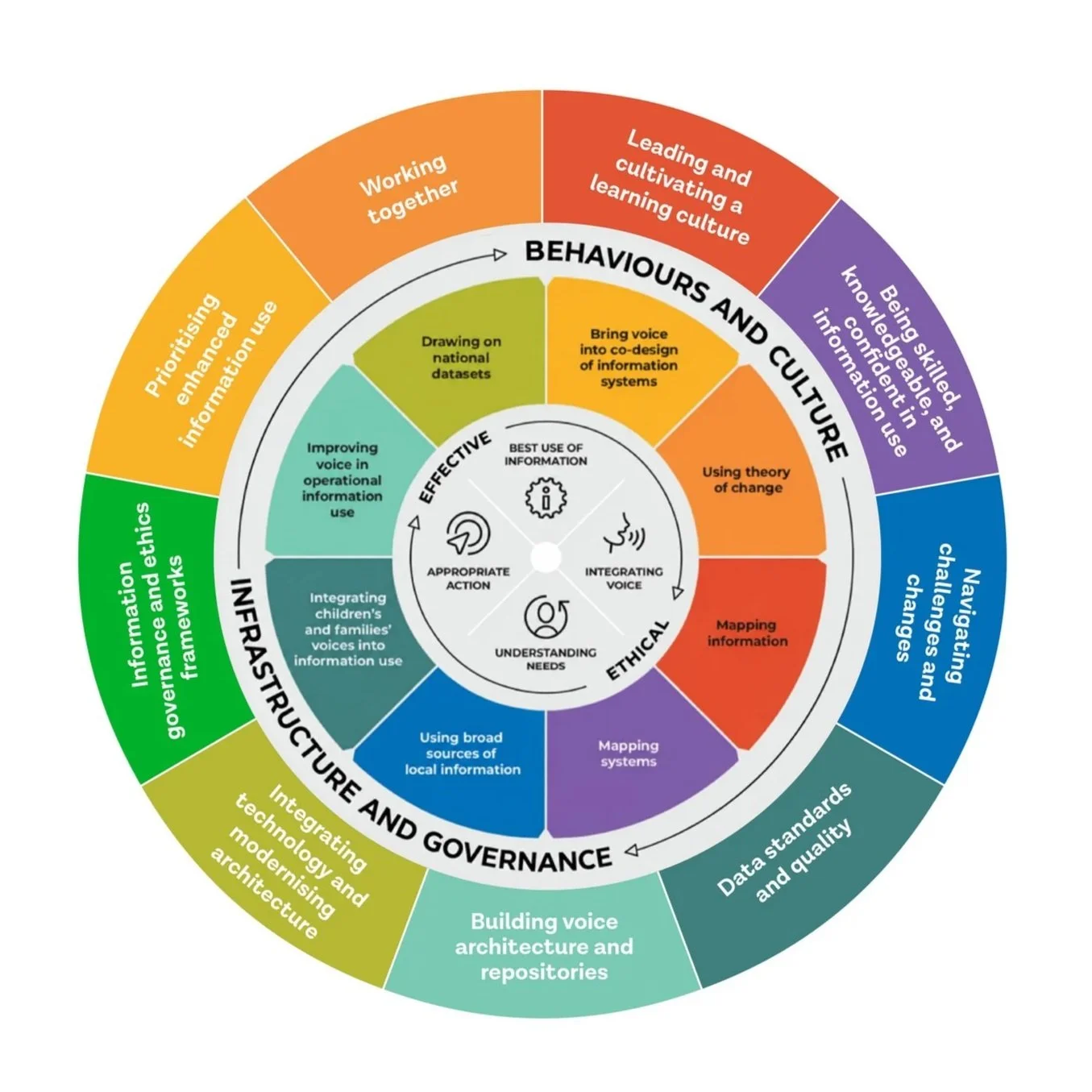
The Framework is designed to transform how information about and from children and families is used to support them. Its main purpose is to bridge the gap between data and human-centred care.
The Framework shows that ethics and effectiveness go hand in hand. True effectiveness—meeting needs, achieving positive outcomes, and fulfilling duties—cannot happen without ethical practices like transparency, equity, and respect for rights. By prioritising ethics, the framework builds the relational trust needed for good outcomes.
The Framework is organised around three structural layers:
Core Approaches explain WHAT we want to achieve and WHY. They cover strategic goals and mindsets.
Practices define HOW to do it. For example, operational methods and workflows.
System Enablers are the CONDITIONs that help improve information use.
System enablers create the necessary conditions for ethical and effective information use. The Approaches and Practices rely on Enablers to work properly. The two system enablers are:
Behaviours and culture
Infrastructure and governance
Enablers help the system function well and are often invisible unless they are broken. System barriers are often noticeable because they slow things down and create friction.
The toolkit includes resources from the Children’s Information Project, Research in Practice, local authorities, and other expert organisations.
I led on the development of the system enablers and toolkit for Research in Practice. Explore the toolkit here.